Travel is changing quickly. In 2026, travelers are looking beyond traditional sightseeing and crowded tourist attractions. Instead, many are searching for meaningful experiences, flexible itineraries, local culture, nature, wellness, and destinations that match their personal interests.
Recent travel-industry reports point toward a more personalized approach to vacations. Booking.com’s 2026 travel predictions, based on research involving more than 29,000 travelers across 33 countries and territories, highlight trips built around individual interests and experiences. Expedia’s 2026 research similarly identifies trends such as slow travel, farm stays, literary retreats, sports-focused trips, and screen-inspired travel.
Whether you are planning a weekend getaway, an international vacation, a family holiday, or a solo adventure, understanding the major travel trends 2026 can help you plan a trip that feels more personal and memorable.
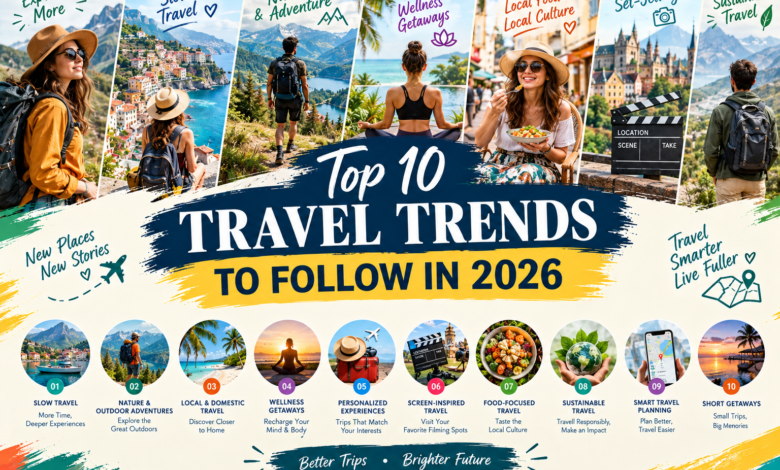
Here are 10 travel trends worth knowing this year.
1. Slow Travel Is Becoming More Popular
One of the biggest travel trends 2026 is slow travel.
Instead of visiting five cities in seven days, slow travelers spend more time in one destination. The goal is not to see everything as quickly as possible but to experience a place at a relaxed pace.
A slow-travel itinerary might include:
- Staying in one city for several days
- Exploring local neighborhoods
- Eating at independent restaurants
- Walking instead of taking transportation whenever practical
- Visiting local markets
- Spending time in nature
- Learning about local traditions
- Leaving free time in the itinerary
Expedia included “Slow Down Towns” among its 2026 travel trends, reflecting growing interest in destinations and experiences that encourage travelers to slow down.
Why Slow Travel Works
Fast-paced vacations can sometimes feel like a checklist. You may take hundreds of photographs but return home feeling exhausted.
Slow travel creates more opportunities for spontaneous discoveries.
For example, instead of spending one day each in three European cities, you could choose one city and explore it deeply. You might discover a small café, meet local residents, find a neighborhood park, or stumble across a cultural event that was never included in your original itinerary.
Travel tip: Plan only one or two major activities per day and leave room for exploration.
2. Nature and Outdoor Adventures
Nature-focused travel continues to be an important part of modern tourism.
Travelers are increasingly interested in mountains, forests, beaches, national parks, countryside destinations, hiking trails, and outdoor activities.
Nature travel can take many forms, including:
- Hiking
- Camping
- Wildlife watching
- Mountain trips
- Beach escapes
- Cycling
- Kayaking
- Scenic road trips
- Forest stays
- Photography trips
The appeal is simple: nature gives travelers an opportunity to step away from busy routines and experience a different environment.
You also do not always need to travel internationally. A national park, mountain region, lake, coastal area, or countryside destination within your own country can provide a memorable adventure.
How to Plan a Nature Trip
Before visiting an outdoor destination, research:
- Weather conditions
- Local transportation
- Accommodation
- Trail difficulty
- Safety requirements
- Park or attraction rules
- Seasonal closures
- Required permits
Good preparation can make an outdoor trip much more enjoyable.
3. Local and Domestic Travel
International travel is exciting, but 2026 is also seeing strong interest in destinations closer to home.
Expedia’s 2026 summer research reported that social conversation around domestic vacations increased by 77% year over year globally, while its broader research highlights travel experiences that do not necessarily require long-distance journeys.
This trend makes sense for several reasons.
Local travel can be:
- Less expensive
- Easier to organize
- More flexible
- Better suited to short breaks
- Less demanding in terms of travel time
You may know your own country well, but there are probably still places you have never explored.
Try Being a Tourist in Your Own Country
Look for:
- Historic cities
- Mountain towns
- Coastal areas
- Cultural festivals
- Local food destinations
- Wildlife areas
- Heritage sites
- Scenic roads
- Rural communities
A two- or three-day local trip can sometimes provide the refreshing break you need without the cost and complexity of a long international vacation.
4. Wellness and Mindful Getaways
Travel is increasingly being used as an opportunity to relax, recharge, and step away from everyday stress.
Wellness travel can include much more than luxury spas.
A wellness-focused trip might involve:
- Yoga
- Meditation
- Walking
- Nature activities
- Healthy food
- Spa treatments
- Digital breaks
- Quiet accommodation
- Sleep-focused routines
The goal is to return home feeling refreshed rather than exhausted.
Build Your Own Wellness Vacation
You do not need to book an expensive wellness resort.
You can create a simple wellness trip by choosing a peaceful destination and building your schedule around relaxation.
For example:
Morning: Walk or stretch
Afternoon: Explore nature or local attractions
Evening: Healthy dinner and quiet time
Night: Reduce screen use and get adequate sleep
The important part is creating a trip that gives you space to slow down.
5. Personalized Travel Experiences
Travelers increasingly want trips that reflect their interests and personalities.
Booking.com’s 2026 travel predictions describe a shift toward more individualized travel, with travelers looking for experiences connected to hobbies, interests, personal milestones, and unique preferences.
This means your perfect vacation does not have to look like someone else’s.
If you love photography, build a photography trip.
If you enjoy food, plan a culinary vacation.
If you love books, visit literary destinations.
If you enjoy sports, organize your trip around sporting events.
If you are interested in history, focus on museums, heritage locations, architecture, and historical neighborhoods.
Popular Interest-Based Trips
Some examples include:
- Food and culinary tours
- Photography trips
- Art and museum vacations
- Hiking holidays
- Music trips
- Sports tourism
- Literary travel
- Architecture tours
- Shopping vacations
- Adventure travel
The advantage of interest-based travel is that almost every part of the itinerary can connect to something you already enjoy.
6. Screen-Inspired Travel
Movies and television shows have always influenced tourism, but screen-inspired travel is becoming an increasingly visible trend.
Expedia’s 2026 research identifies “Set-Jetting” as a travel trend, referring to trips inspired by movies and television shows.
A familiar landscape from a movie can make people curious about the real location.
Travelers may want to visit:
- Film locations
- Famous streets
- Historic buildings
- Fictional-inspired destinations
- Production studios
- Landscapes featured on screen
How to Plan a Screen-Inspired Trip
Start by identifying the actual filming locations.
Then research whether the location is:
- Open to the public
- Privately owned
- Accessible by public transportation
- Part of a guided tour
- Protected or restricted
Always respect local rules and residents when visiting popular filming locations.
A movie may inspire your trip, but the destination itself should still be appreciated for its real culture and community.
7. Food-Focused Travel
Food is one of the easiest ways to connect with a destination.
A growing number of travelers plan trips around local cuisine, markets, restaurants, cooking classes, street food, and regional specialties.
Food travel can transform a simple vacation into a cultural experience.
Instead of simply asking, “What should I see?” ask:
“What should I taste?”
Ideas for a Food-Focused Trip
Try:
- Local breakfast spots
- Traditional restaurants
- Street-food markets
- Food festivals
- Cooking classes
- Local bakeries
- Farmers’ markets
- Regional desserts
- Traditional drinks
- Food tours
You can also research the history behind local dishes.
Understanding where a dish came from and how it became part of a culture can make the experience more meaningful.
Travel Tip
Do not limit your food experience to famous restaurants.
Small local businesses and traditional markets can often provide memorable experiences too. Just make sure food vendors meet reasonable hygiene standards.
8. Sustainable and Responsible Travel
Sustainable tourism is another major part of the modern travel conversation.
Travelers are increasingly considering how their choices affect local communities, cultural heritage, wildlife, and the environment.
Responsible travel can include simple choices such as:
- Supporting locally owned businesses
- Avoiding unnecessary waste
- Respecting cultural traditions
- Following environmental rules
- Avoiding disturbance to wildlife
- Using public transportation when practical
- Choosing reusable items
- Staying on marked trails
- Respecting local communities
Expedia’s 2026 research also highlights responsible tourism and destination management, including considerations around local communities, environmental protection, planning, and tourism benefits.
Sustainable Travel Does Not Have to Be Complicated
You do not need to make every travel decision perfect.
Small actions can help.
For example, choose a locally owned hotel instead of automatically selecting an international chain, buy from local businesses, and avoid activities that exploit animals or damage natural environments.
Responsible travel is ultimately about leaving a destination with its culture, environment, and communities respected.
9. Smart Travel Planning and Technology
Technology continues to change how people research and organize vacations.
Travelers now have access to tools for:
- Finding accommodation
- Comparing transportation
- Building itineraries
- Translating languages
- Checking maps
- Finding restaurants
- Managing reservations
- Tracking expenses
- Monitoring weather
- Discovering attractions
AI-based tools are also becoming increasingly relevant to travel planning, helping people organize information and create customized itineraries.
However, technology should support your trip rather than control it.
Use Technology Wisely
Before traveling, save important information offline.
Keep copies of:
- Passport or identification documents
- Hotel reservations
- Transportation tickets
- Travel insurance information
- Emergency contacts
- Important addresses
Do not rely entirely on internet access, especially when visiting rural or remote destinations.
A good travel plan combines digital convenience with basic preparation.
10. Short Getaways and Flexible Trips
You do not always need a two-week vacation.
Short trips are becoming an attractive option for people who want to travel more frequently while managing work, family, and budget constraints.
A short getaway could be:
- A weekend city break
- A one-night countryside stay
- A three-day beach trip
- A nearby mountain adventure
- A road trip
- A cultural weekend
Short trips can also make travel feel more achievable.
Instead of waiting all year for one major vacation, you can plan several smaller breaks throughout the year.
How to Make a Short Trip Feel Longer
The key is reducing unnecessary travel time.
Choose destinations that are relatively easy to reach and focus your itinerary on a small area.
For example, rather than trying to visit an entire region in two days, choose one city or town and explore it properly.
This connects with the broader slow-travel trend: doing fewer things, but experiencing them more deeply.
How to Choose the Right Travel Trend for You
Not every travel trend will suit every traveler.
Your ideal trip depends on your budget, available time, interests, travel companions, and comfort level.
Use this simple guide:
| If You Want… | Consider… |
|---|---|
| Relaxation | Wellness travel |
| Adventure | Nature and outdoor trips |
| Cultural experiences | Local and food-focused travel |
| Lower travel costs | Domestic travel |
| Personal hobbies | Interest-based travel |
| Entertainment | Screen-inspired travel |
| A slower vacation | Slow travel |
| More frequent breaks | Short getaways |
| Environmentally conscious travel | Sustainable tourism |
| Easier planning | Smart travel technology |
The best itinerary is one that matches your actual needs rather than simply following whatever is trending online.
Travel Planning Checklist for 2026
Before leaving for your next trip, use this checklist.
Before Booking
- Decide your travel budget
- Check passport and visa requirements
- Research the destination
- Compare transportation options
- Check the best travel season
- Read recent traveler information
- Choose accommodation carefully
Before Departure
- Confirm reservations
- Download important documents
- Check the weather
- Prepare appropriate clothing
- Organize medications if needed
- Inform trusted contacts of your itinerary
- Check local transportation
- Keep emergency information accessible
During the Trip
- Respect local customs
- Protect your belongings
- Stay aware of your surroundings
- Support local businesses
- Avoid excessive waste
- Keep important documents secure
- Leave enough free time to enjoy the destination
How to Save Money While Traveling in 2026
Travel does not always have to be expensive.
Here are some practical ways to control your travel budget.
Travel During Shoulder Seasons
The shoulder season is the period between peak and off-peak travel seasons.
Prices can sometimes be more manageable, while popular attractions may be less crowded.
Always check current local conditions because seasons vary by destination.
Compare Accommodation Options
Consider hotels, guesthouses, hostels, apartments, and other legitimate accommodation types.
Look beyond the headline price and check:
- Location
- Taxes
- Cleaning fees
- Transportation costs
- Cancellation conditions
- Breakfast
- Included amenities
A cheaper hotel far from attractions may cost more overall once transportation is included.
Eat Like a Local
Eating every meal at tourist-oriented restaurants can quickly increase your expenses.
Local markets, neighborhood restaurants, bakeries, and casual food spots can offer different price points and a stronger connection to local cuisine.
Plan Transportation
Research public transportation before arriving.
In some destinations, trains, buses, walking, or shared transportation can be significantly more economical than private transfers.
Common Travel Mistakes to Avoid
Even experienced travelers can make avoidable mistakes.
1. Overplanning
A packed itinerary can leave you exhausted.
2. Ignoring Travel Documents
Always check passport validity, visa rules, and entry requirements before departure.
3. Forgetting Local Customs
Research basic cultural etiquette before arriving.
4. Choosing Accommodation Only by Price
Location and reviews can matter just as much as the nightly rate.
5. Not Having a Backup Plan
Flights can be delayed, attractions can close, and weather can change.
Keep alternatives available.
6. Trying to See Everything
You cannot experience an entire country in a few days.
Choose your priorities and enjoy them.
Frequently Asked Questions About Travel Trends 2026
What are the biggest travel trends in 2026?
Major travel trends 2026 include slow travel, nature-focused trips, local and domestic travel, wellness vacations, personalized experiences, food tourism, sustainable travel, screen-inspired travel, technology-assisted planning, and short getaways. Industry reports from Booking.com and Expedia highlight several of these shifts.
Is slow travel becoming more popular?
Yes. Slow travel is being highlighted as an important 2026 travel trend. It focuses on spending more time in fewer places and experiencing destinations at a more relaxed pace.
What is set-jetting?
Set-jetting means traveling to destinations inspired by movies or television shows. Expedia identifies screen-inspired travel as one of its 2026 trends.
Is domestic travel still popular in 2026?
Yes. Expedia’s 2026 summer research reported increased global social conversation around domestic vacations, showing continued interest in closer-to-home travel.
How can I make my travel more sustainable?
Support local businesses, respect local communities and cultural traditions, minimize waste, follow environmental rules, avoid disturbing wildlife, and choose transportation options thoughtfully when practical.
What is the best way to plan a vacation in 2026?
Start with your budget, available time, interests, and destination requirements. Use online tools to compare options and organize your itinerary, but verify important information such as entry requirements, transportation schedules, and accommodation details before traveling.
Final Thoughts
The biggest change in travel trends 2026 is that travel is becoming more personal.
Instead of simply asking where everyone else is going, travelers are increasingly looking for experiences that match their interests, lifestyles, budgets, and priorities.
For some people, that means a quiet weekend in nature. For others, it could mean a food-focused city trip, a wellness retreat, a road trip, a sports experience, or a movie-inspired adventure.
Slow travel, local exploration, wellness, nature, food, sustainable tourism, and personalized experiences all offer different ways to make a trip more meaningful.
The most important thing is not to follow every trend. Choose the travel style that fits you.
Travel more intentionally, explore responsibly, and make every journey part of the experience.